
Projected vs Actual Release
A projected release date is a calculated or scheduled date. An actual release date is the date custody ended in the responsible agency's record. For KCSO jail custody, the printable inmate information may show a Release Date field, but the court sentence, bail record, jail release record, and any holds can still control what the field means. For CDCR custody, the public vocabulary may include parole-eligible dates and earliest possible release terms rather than a simple county-style release date.
Scheduled is not final: A projected date can change because of court orders, credits, detainers, discipline, parole decisions, resentencing, or agency processing. Always confirm the current date with the agency that controls custody.
For a pretrial detainee at Lerdo Pre-Trial Facility or another Kern County jail, there may be no fixed release date at all. Bail release can take up to eight hours after posting, time-served inmates generally release between 8:00 AM and midnight, and court releases are let out before midnight on the scheduled release date according to KCSO release-logistics research.
That timing detail is local to Kern and changes how a projected date should be read. A court release date may answer the legal question, while KCSO processing answers when the person actually exits the facility. If another hold or detainer is present, the person may leave Kern custody without returning to the community.
How to Find the Date
The first step is to decide which agency controls the person's custody. A Kern County jail date, a CDCR prison date, and a federal or ICE release date come from different systems.
- If the person is in KCSO jail, search KCSO Inmate Information and the printable view for the Release Date field, holding jail, booking number, and bail amount.
- Check the Kern Superior Court Portal or Case Information Search for the sentence, bail change, time-served order, dismissal, transfer order, or probation order.
- If the person has a CDCR number or was transferred to state prison, search CDCR CIRIS and compare name, CDCR number, age, commitment county, current location, and BPH date fields.
- If the person is in KCSO Work Release or Electronic Monitoring, confirm with the program and the sentencing court because physical release from a jail bed may not mean the sentence is finished.
- If a federal or immigration detainer is involved, use BOP or ICE channels because the county date may only mark the end of Kern custody.
- If the date seems wrong, use official court records, KCSO Records, CDCR Case Records, or the appropriate agency correction path rather than recalculating from the public roster.
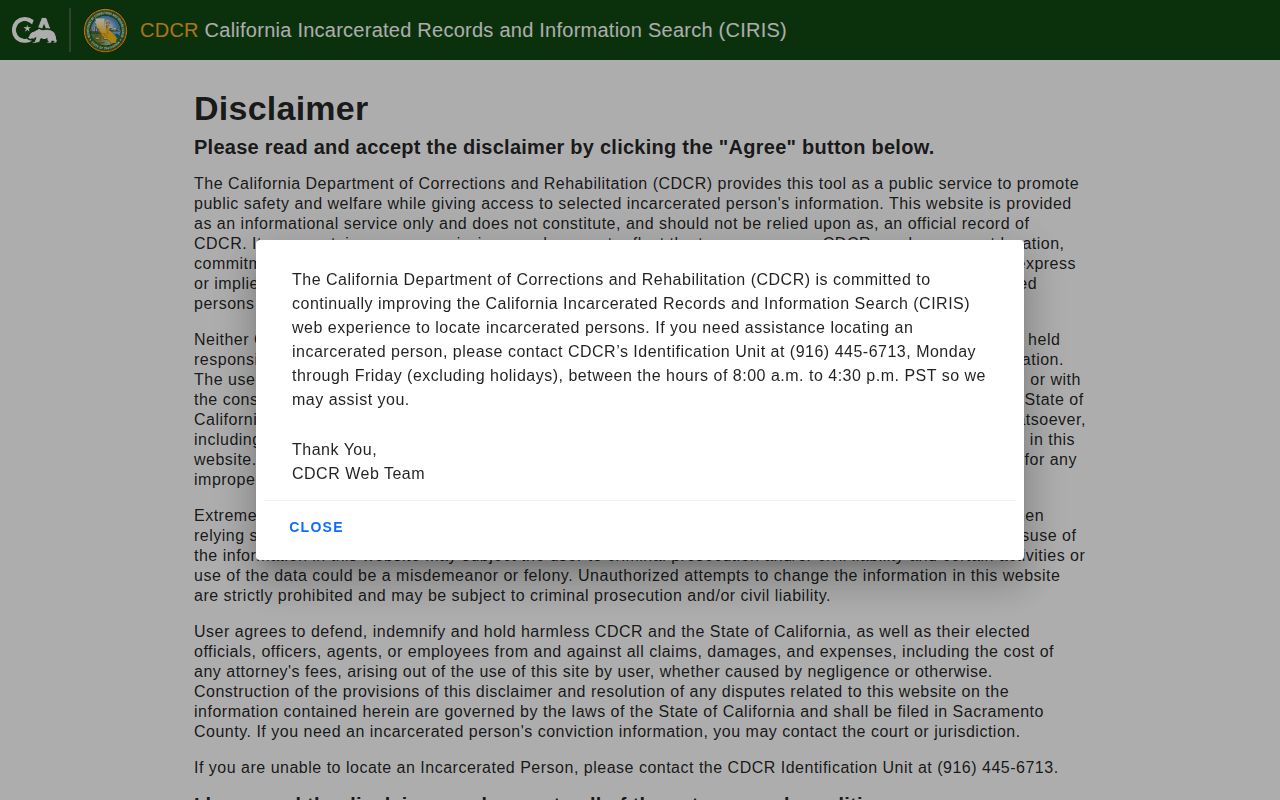
Source context: CDCR CIRIS is the statewide search path for current CDCR custody and related date fields. The manifest includes the successful CIRIS screenshot below for this page.
County Jail Date Calculation
Kern County jail release dates are affected by arrest and booking date, bail, court release order, sentence length, actual time served, conduct or work credits, holds, warrants, detainers, transport, and court processing. Penal Code section 4019 is the core California county-jail conduct-credit statute. It can matter for presentence credit and resentencing documents, but it is not safe to calculate a release date from a public roster alone.
The KCSO printable view is still useful because it may show a Release Date field. Read that field alongside the court's sentence or minute order. If a person is released to Work Release, Electronic Monitoring, Sheriff's Parole, probation, PRCS, or another supervision track, the physical exit from jail may be only one part of the legal status.
For a county-jail sentence, the court record is often the document that explains credits and sentence structure. KCSO can confirm the jail release record, but the court's minute order, judgment, or sentencing document explains why the date exists. If the public systems conflict, preserve the booking number and case number and ask for the specific release-date, release-time, and manner-of-release record rather than asking KCSO to calculate the sentence from scratch.
CDCR and BPH Date Fields
California's state-prison release vocabulary is more specific than a single projected release label. BPH identifies several date fields that may appear in or relate to CDCR records and parole eligibility. These terms should not be collapsed into one generic release date.
| Date field | Meaning in California records |
|---|---|
| EPRD | Earliest Possible Release Date for determinate sentences, based on the court sentence less applicable credits. |
| MEPD | Minimum Eligible Parole Date for indeterminate or life-with-possibility-of-parole terms. |
| NPED | Nonviolent Parole Eligible Date under Proposition 57 for eligible nonviolent offenders, with exclusions. |
| YPED | Youth Parole Eligible Date tied to offenses committed under age 26, with timing based on sentence category. |
| EPED | Elderly Parole Eligible Date once age and served-time thresholds are met, subject to exclusions. |
| Controlling parole eligible date | The earliest applicable opportunity for parole consideration or release when more than one date applies. |
A BPH grant is not the same as immediate release. BPH hearing-results material says a grant is a recommendation to be released to parole and is subject to review by the Board's Legal Division and the Governor's Office before becoming final.
This matters in Kern because CCI, KVSP, NKSP, and WSP are CDCR facilities located in the county, but their release-date records are state-prison records. A person housed at one of those prisons should not be searched only through the Kern jail roster. CIRIS, BPH eligibility material, CDCR Case Records, DAPO, and victim-services notification channels are the state-prison path.
Good-Time and Work Credits
California release dates depend on the sentence type and credit rules. Penal Code section 4019 applies in many county-jail conduct and work credit contexts. Penal Code section 2933 authorizes worktime credit reductions for eligible state prisoners. Penal Code section 2933.1 limits credits for qualifying violent felonies listed in Penal Code section 667.5(c) to no more than 15 percent worktime credit.
That 15 percent limit is the common "serve about 85 percent" concept, but it is not a universal rule for every California case. It applies to qualifying categories and interacts with current law, regulations, sentence structure, detainers, discipline, and court orders. Kern County readers should avoid doing math from a charge name alone. The court abstract, minute order, jail credit record, and CDCR calculation record are the controlling materials.
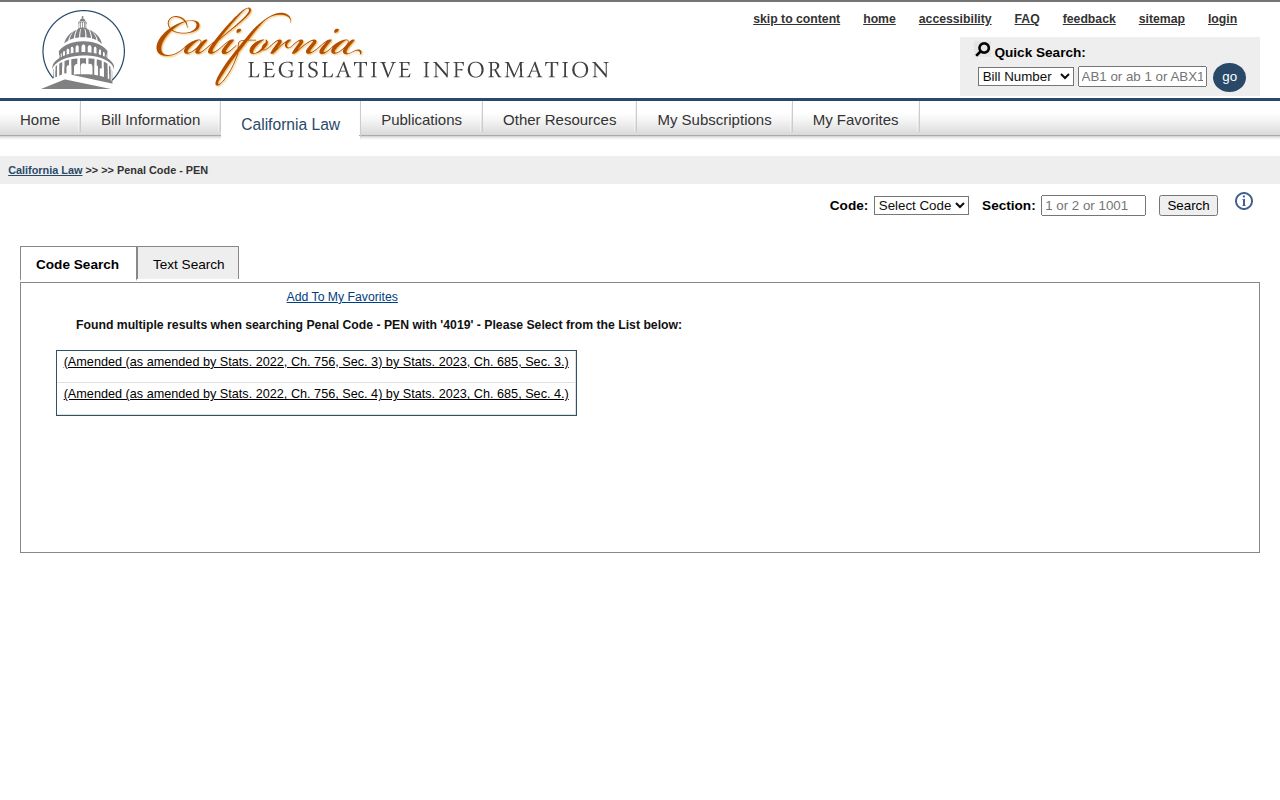
Source context: Penal Code section 4019 is the county-jail credit statute highlighted in the research. The manifest includes the successful screenshot below for this page.
Why the Date Changes
Projected dates move when the legal or custody inputs change. CDCR's release processing research is especially clear that certified court orders, other commitments, detainers, supervision assignment, notices, release funds, and required legal tasks can all affect release processing.
| Change factor | Effect on release timing |
|---|---|
| Court order or resentencing | Can shorten, extend, or recalculate custody when certified documents reach the agency. |
| Conduct or work credits | Can reduce a sentence when earned and can change if credits are lost, restored, or corrected. |
| Detainer, warrant, or hold | May mean the person leaves KCSO or CDCR custody but enters another agency's custody. |
| Parole hearing outcome | Can create a parole-review path, but BPH grants still require additional review before final release. |
| Transfer to CDCR, BOP, or ICE | Moves the release-date question to a different system and may change what "release" means. |
| Calculation error or missing document | May require Case Records, court correction, Form G-22, or CDCR Form 602 depending on the issue. |
Confirming the Date
For KCSO jail custody, confirm with the printable KCSO record, KCSO Arrest Records, and the Kern Superior Court docket. For CDCR custody, confirm with CIRIS, CDCR Case Records, BPH date fields, and DAPO/BPH records where parole is involved. Register through VINELink check before release if a custody-status alert is needed.
If the person believes the sentence calculation is wrong in CDCR custody, the research identifies Form G-22 addressed to Case Records and CDCR Form 602 as possible correction or grievance paths. For county-jail calculations, the sentencing court and KCSO release record are the better confirmation sources.
For a person on Work Release or Electronic Monitoring, confirm both the program status and the sentencing court record. Those programs can put a person outside a jail bed while a sentence or supervision requirement continues. For a person with a federal or ICE detainer, confirm whether the projected county release date is only the date KCSO custody ends.