
Kern's Three-Day Release Window
The research did not locate a distinct KCSO public page for people released in the last 72 hours. The best local approach is to combine KCSO Inmate Information, the printable inmate record, KCSO Arrest Records, the Kern Superior Court Portal, and California VINE. This page differs from the 24-hour release list because it is built around rechecking over a longer period, especially when a release begins near a weekend, holiday, or court-processing cutoff.
Local access fact: KCSO says arrest information is public if the subject is currently in custody or if the release date is within the past 60 days. That statement supports a recent-record request path, but it is not a promise that a 72-hour list exists online.
The three-day window is useful because custody systems do not all change at the same instant. A court may order release, the jail may process the person later, VINE may send a custody-status notice, and the printable KCSO record may update after a visible roster page. A weekend can stretch the practical confirmation process even when the legal basis for release is straightforward.
How to Check Three Days
Use the 72-hour process when a same-day search missed the person, when the reported release happened over a weekend, or when another agency may be involved. Keep a small record of dates checked, source pages used, and the exact name or booking number searched.
- Search KCSO Inmate Information. If the person is still active in custody, note the holding jail and booking number rather than assuming release.
- Open the printable view if available and look for a Release Date field. Capture the booking number and holding jail for later records requests.
- Check KCSO Arrest Records for the 60-day public-information rule and recent arrest-record access.
- Search the Kern Superior Court Case Information Search and portal for release orders, bail changes, dismissals, sentencing, time-served outcomes, or transfer orders.
- Search or register through California VINE when a custody-status change notice is needed. Use it as a notification source, then confirm with the agency of custody.
- If the record indicates a transfer, search CDCR CIRIS, the BOP locator, or ICE ODLS depending on where the person moved.
- If no online channel resolves the question, submit a focused CPRA request to KCSO or request official court records from Kern Superior Court.
This wider sequence is especially important for releases from the Lerdo facilities because the public question often changes from "is this person out?" to "did Kern custody end, and did another agency take custody next?"
What the 72-Hour Check Uses
The fields below are the practical substitutes for a rolling three-day release feed. Some are online fields, while others are record-request or court-confirmation targets.
| Information | How it helps over 72 hours |
|---|---|
| Booking number | Provides an exact KCSO identifier when repeating searches or contacting Arrest Records. |
| Holding jail | Shows whether the record belongs to Lerdo, Central Receiving, Mojave, or another KCSO custody point. |
| Release Date | Printable-view field that may confirm the end of county custody when populated. |
| Total bail amount | Helps distinguish a bail release path from a time-served or court-order release. |
| Court minute or disposition | Explains the legal event behind the release, such as dismissal, bail modification, sentence, or transfer. |
| VINE custody status | May show a custody change or send an alert, but should be confirmed with KCSO, court, CDCR, BOP, or ICE. |
| Transfer indicator | Signals that the county release may be followed by CDCR, federal, or immigration custody. |
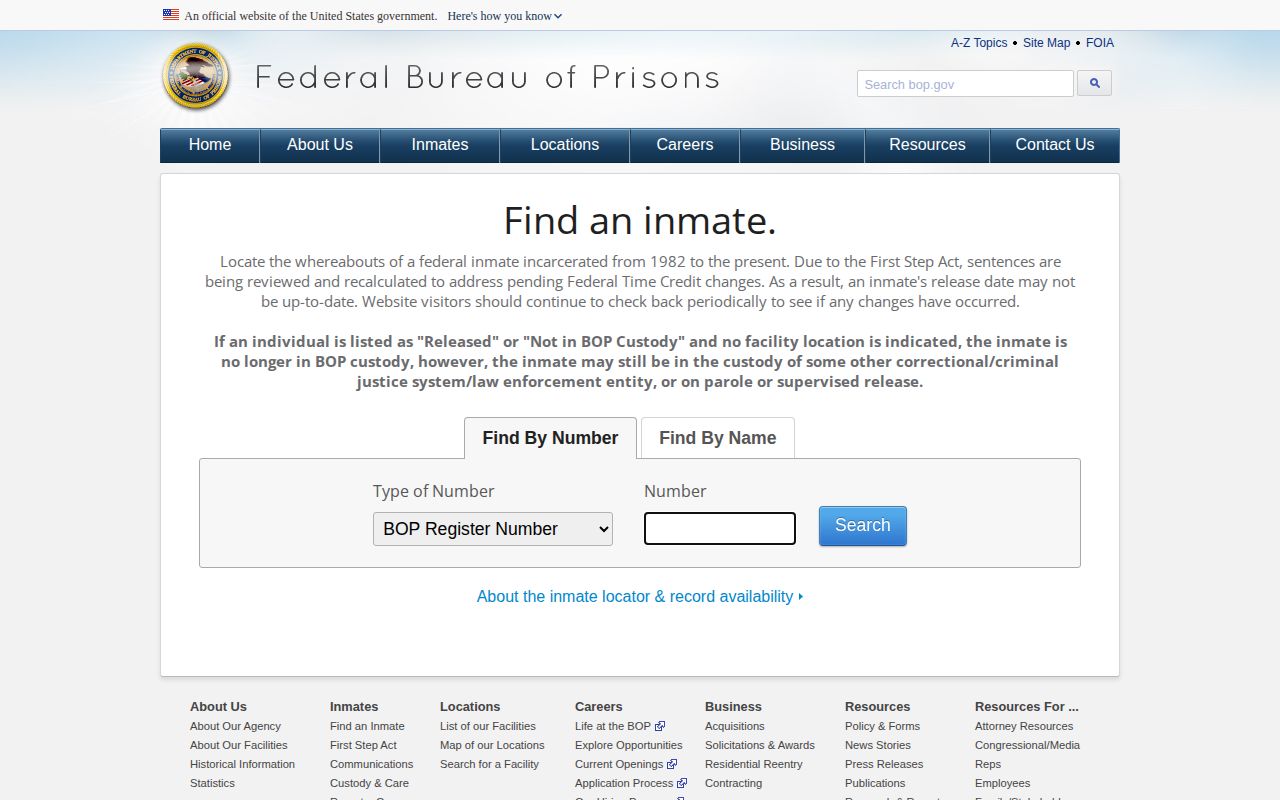
Source context: the BOP inmate locator is one required fallback when a Kern jail release is actually a federal transfer. The manifest includes the screenshot below for this 72-hour release page.
Weekend and Holiday Releases
A three-day check is most useful when the release event and the public record update happen on different schedules. KCSO research says time-served inmates generally release between 8:00 AM and midnight, court releases are released before midnight on the scheduled release date, and bail releases can take up to eight hours. If a court order comes late in the day or near a weekend, a one-time 24-hour check can miss the final public signal.
Recheck point: For weekend or holiday releases, search the sheriff record again, then the court record, then VINE. The court may explain why custody ended even when the roster no longer gives a simple answer.
Do not treat a missing roster entry as proof that a person was released to the community. The person may have transferred to CDCR, BOP, ICE, another county, a hospital or competency program, or another legal hold. The 72-hour workflow should always ask where custody went next.
For court-related releases, the Kern court record can be more durable than the sheriff's current custody display. The court may show bail modification, sentencing, credit for time served, dismissal, revocation activity, or a transfer order after the jail roster has changed. If the online court information is not enough, Kern Superior Court's records process is the better source for minute orders, sentencing documents, or certified copies.
Transfers After Kern Custody
Transfers are the main reason a three-day release search needs more than KCSO. If the person left a Kern County jail for state prison, use CDCR CIRIS and the California Department of Corrections and Rehabilitation contact paths. For federal custody, use the Bureau of Prisons inmate locator and appropriate U.S. Marshals inquiry path. For immigration custody, use ICE Online Detainee Locator System, the Mesa Verde ICE Processing Center page if relevant, or ICE FOIA for records.
KCSO Pre-Trial and Max-Med research identifies inquiry numbers for U.S. Marshal Eastern in Fresno, U.S. Marshal Central in Los Angeles, Board of Prison inmates, and ICE. Those are not a general public release list, but they matter when KCSO custody ends because another agency took the person.
The transfer distinction also protects against reading a county release date too broadly. A person can be released from KCSO custody and still not be released from legal custody overall. If the next system is CDCR, CIRIS and CDCR Case Records become the appropriate confirmation points. If the next system is federal or immigration custody, the BOP locator, ICE ODLS, ICE facility contacts, or records requests should be checked before treating the case as resolved.
Records Request Backup
When the three-day online check fails, a direct records path is more reliable than repeated broad searches. KCSO Records Section is located at 1350 Norris Road, Building B, Bakersfield, CA 93308, and public hours are Monday through Friday, 8:00 AM to 5:00 PM. KCSO lists Arrest Records at (661) 391-7624. For a written CPRA request, the research lists KCSO Support Services Building, 34970 McMurtrey Avenue, Bakersfield, CA 93308, and cprarequests@kernsheriff.org.
Ask for the specific record type. A useful request may name the booking sheet, release date and time, manner of release, jail release log entry, transfer record, or court-linked disposition. If the issue is the official court order, use Kern Superior Court's records process rather than asking the sheriff to interpret the case.
For an older release, include the date range and all identifiers available rather than asking generally for "72-hour releases." Useful identifiers include full name, date of birth, booking number, arrest date, holding facility, court case number, and the suspected release or transfer date. That level of detail fits the KCSO CPRA form's request for a detailed description and helps separate a release record from criminal-history, court-record, or other-agency material that KCSO says it cannot process through its CPRA form.