
Where Mesa Verde Releases Go
Mesa Verde ICE Processing Center is an immigration detention facility at 425 Golden State Avenue in Bakersfield. It is not a Kern County jail and not a CDCR prison. That means a person released from Mesa Verde is not being released through the county jail roster or a state-prison parole process. The event belongs to immigration custody and may be reflected in ICE records, immigration-court records, bond paperwork, release paperwork, an order of supervision, or attorney files.
A Mesa Verde search may also show a transfer or removal rather than a release into the community. The ICE Online Detainee Locator System is the starting point for current ICE custody location, but it is not a complete release archive and may not show every person or every recent change. If KCSO previously booked the person and then released or transferred them to ICE, KCSO can confirm the county custody ended. ICE confirms what happened after immigration custody began.
Immigration-custody rule: Use ICE ODLS, Mesa Verde or ICE field-office contacts, immigration court, bond or release documents, attorney paperwork, and ICE FOIA. Use KCSO only for a prior county booking or transfer record.
How to Confirm a Mesa Verde Release
The Mesa Verde workflow starts with ICE identity information. If you have an A-number, use it. If not, use the biographical search details available to you, then confirm the result through paperwork or an official contact because ODLS can miss recent changes or people outside its public display rules.
- Search ICE ODLS by A-number when known. An A-number search is usually the most precise route.
- If the A-number is unknown, use the biographical search and compare name, country of birth, and other identity details available in official paperwork.
- Check whether ODLS lists Mesa Verde, another ICE facility, or no current public custody match. No match is not enough by itself to prove release.
- Contact the facility or ICE field-office channel when ODLS is unclear, especially when the person may have transferred, been removed, or been released under conditions.
- Review immigration-court records or attorney paperwork for bond, custody redetermination, order of supervision, removal, or court-ordered release language.
- Keep the bond receipt, release paperwork, notice to appear, supervision paperwork, or removal documents because those may be more specific than ODLS.
- Use ICE FOIA when a formal immigration detention or release record is needed and public lookup tools do not answer the question.
The Kern County released inmates guide is useful only for deciding whether the record belongs to KCSO, CDCR, federal custody, ICE, or a court. For Mesa Verde itself, the primary route is ICE.
Mesa Verde Records and Contact
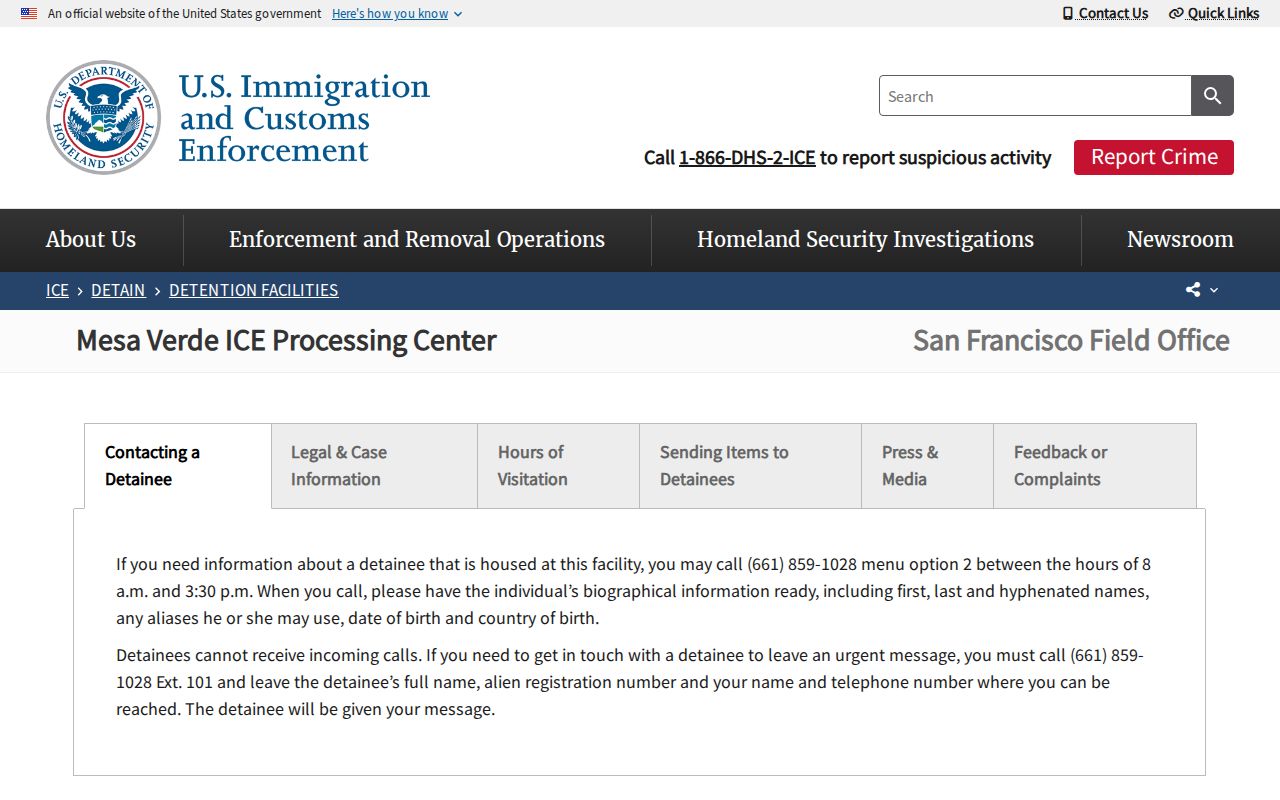
Use the ICE facility page and ICE contact channels for Mesa Verde custody questions. The research identifies the facility address but does not provide a facility phone number in the facility block, so this page does not invent one. KCSO's Pre-Trial and Max-Med pages list ICE at (661) 328-4500 for inquiries involving immigration inmates in those local contract contexts, but Mesa Verde release verification should still run through ICE records and facility or field-office channels.
Facility Address
Mesa Verde ICE Processing Center
425 Golden State Avenue
Bakersfield, CA 93301
ICE immigration detention facility
Records Route
ICE ODLS for public custody location, ICE facility or field-office contacts for current custody questions, immigration court and attorney records for bond or release orders, and ICE FOIA for formal records.
When a person moved from a Kern County Sheriff's Office jail to ICE, split the records. KCSO can confirm the local booking, local release, or transfer out of county custody. ICE can confirm immigration detention, Mesa Verde custody, bond, release, transfer, removal, or supervision after that point.
About Mesa Verde ICE Processing Center
Mesa Verde is physically in Bakersfield, but the custody system is federal immigration detention. It belongs in a Kern County release site because families and searchers may know only that the person was held in Bakersfield. The right agency, however, is ICE, not KCSO and not CDCR.
ICE custody events use different vocabulary from jail and prison records. A county jail release date usually marks the end of local criminal custody. A CDCR release may involve parole eligibility, BPH, Case Records, and DAPO. A Mesa Verde release may involve immigration bond, order of supervision, parole, removal, transfer, attorney paperwork, immigration-court orders, or ICE custody decisions.
ICE Release Records to Check
ICE release research is usually document-based. A public locator may show current custody location, but the paper or electronic documents from ICE, immigration court, bond processing, or the person's attorney often explain the legal reason custody changed.
| Record or document | What it may show |
|---|---|
| ODLS result | Public ICE custody location when the person is listed and searchable. |
| Bond paperwork | Bond amount, payer information, custody release condition, and case identifiers. |
| Order of supervision | Conditions and reporting requirements after release from detention. |
| Immigration-court record | Hearing status, custody-related orders, removal proceedings, or case outcome. |
| ICE FOIA response | Formal detention, transfer, release, or removal records when public tools are insufficient. |
When KCSO Records Still Matter
Kern's custody map is easy to confuse because local jails, CDCR prisons, federal contract booking, alternative custody, and ICE detention all overlap in the same county. KCSO's Pre-Trial and Max-Med pages list inquiry paths for U.S. Marshal, Board of Prison, and ICE inmates. That matters when someone was first booked locally and then transferred to immigration custody.
In that situation, use KCSO records only to document the county event: booking, holding jail, charges or holds, county release date, and transfer out of KCSO custody. Then use ICE ODLS, Mesa Verde or field-office contacts, immigration court, bond/release paperwork, and ICE FOIA for the immigration event. A county release may only mean "released from KCSO to ICE," not that the person returned to the community.
ODLS Limits and Follow-Up
ODLS is a starting point, not a final archive. The research notes that the ICE locator may fail to show people under certain conditions. Recent releases, transfers, identity mismatches, under-18 detainees, and data timing can all make a public search incomplete. Treat a no-result search as a reason to verify through documents or contacts, not as proof that the person was never at Mesa Verde.
If the person has an attorney, the attorney's custody and bond documents may be the fastest accurate source. If there is no paperwork available, ICE FOIA is the formal record path. If the person also had a criminal case in Kern County, use the court record for the criminal case and ICE records for the immigration detention decision.