
Electronic Monitoring Releases
KCSO research identifies Electronic Monitoring and Sheriff's Parole as release-to-supervision paths for lower-risk sentenced people. The person may be physically out of jail while still under KCSO supervision. That is the central distinction for this page. Electronic Monitoring is not a CDCR state-prison release, not a federal release, and not a simple disappearance from the roster. It is a local county supervision status attached to a court and KCSO record.
KCSO says the program was created in response to AB 109, California's Public Safety Realignment, which shifted more sentenced people into local custody. EMP and Sheriff's Parole release lower-risk inmates back into the community under rules intended to manage compliance. The unit supervises people released with GPS and/or alcohol monitoring and monitors compliance through home visits, GPS, phone tracking, or mail correspondence.
How to Confirm EMP Status
EMP confirmation works best when the search starts with the order that created the status. The court may show the sentence, modification, release order, or supervision condition. KCSO EMP or Sheriff's Parole records show whether the person was accepted, actively monitored, completed, violated terms, or returned to another custody path. Probation or PRCS records may also matter if the court or release plan includes those agencies.
- Check Kern Superior Court for the sentence, release order, minute order, or modification that points to EMP or Sheriff's Parole.
- Contact the KCSO Electronic Monitoring or Sheriff's Parole channel for program-specific status.
- Use KCSO inmate information or Arrest Records to connect the EMP status to the earlier jail booking or release date.
- If probation, PRCS, or parole is named in the case, verify that supervision status through the appropriate agency.
- If the person no longer appears in the jail roster, do not assume discharge. Check whether EMP supervision is still active.
The Parole & Probation page explains how county and state supervision records differ. The Kern County released inmates page covers the broader search sequence when a jail release turns into another agency status.
Electronic Monitoring Records and Contact
KCSO's Electronic Monitoring Program page is the program-specific source for EMP and Sheriff's Parole. Research does not provide a separate public street address or standalone phone number in the facility block, so verification should be routed through KCSO EMP/Sheriff's Parole, KCSO Detentions, KCSO Arrest Records for the booking side, and Kern Superior Court for the order.
KCSO Electronic Monitoring Program
Kern County Sheriff's Office
EMP and Sheriff's Parole release-to-supervision records
Use the KCSO EMP page and Detentions routing for program contact.
KCSO Records and Court Path
Arrest Records: (661) 391-7624
KCSO Records Section: 1350 Norris Road, Bakersfield, CA 93308
Kern Superior Court records verify the order behind the monitoring status.
About the Electronic Monitoring Program
Kern County Electronic Monitoring is an alternative custody and supervision channel operated by the Kern County Sheriff's Office. KCSO describes the program in connection with AB 109 and Public Safety Realignment. Its purpose in release research is to explain why a person can be released from a facility but still appear under county control, monitoring, or Sheriff's Parole conditions.
The program uses GPS and/or alcohol monitoring. KCSO research notes that compliance may be monitored by home visits, GPS, phone tracking, or mail correspondence. Those details make EMP different from a simple "released from jail" result. The person is not necessarily in custody inside a facility, but program rules and court orders can still determine where they may be, what they must do, and what happens if they violate terms.
| EMP element | Release-record meaning |
|---|---|
| AB 109 context | Local custody and supervision expanded after Public Safety Realignment. |
| GPS monitoring | Physical release may continue with location-based supervision. |
| Alcohol monitoring | Some releases include monitoring conditions tied to compliance. |
| Sheriff's Parole | KCSO supervision may continue after release from a jail bed. |
Electronic Monitoring Source View
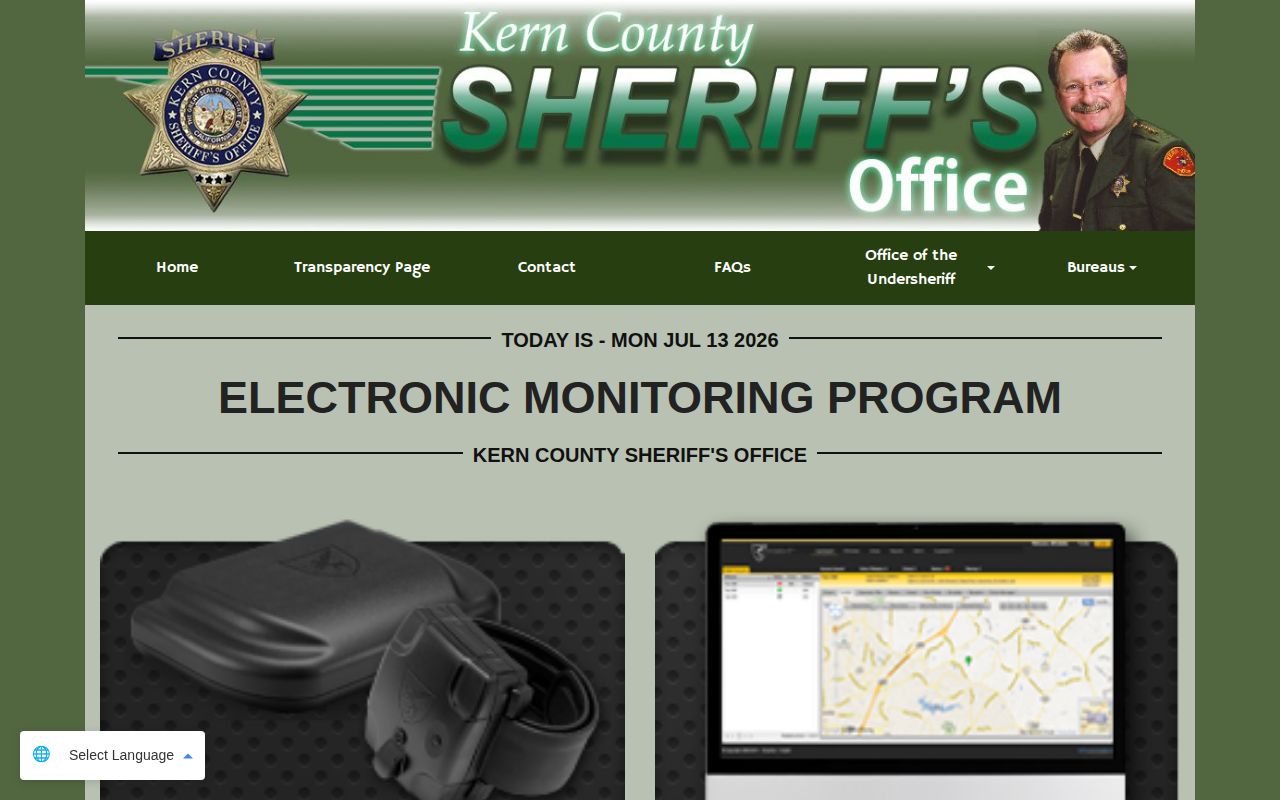
The manifest includes a matching facility screenshot for the KCSO Electronic Monitoring Program, so it fits this page as source context for EMP and Sheriff's Parole.
Released From Jail vs Still Supervised
EMP creates a middle category that Kern release searches should state plainly. A person can be released from Lerdo, Central Receiving, court holding, or another KCSO jail process but still be under county supervision. That person may not appear as housed in a jail bed, yet the release is not the same as completion of all obligations. The court order, EMP record, and any probation or parole record explain the current status.
This distinction also helps with timing questions. A KCSO booking record may show a release date from jail. The EMP record may show that monitoring continued after that date. A court record may show the sentence, modification, or violation response. If the person violates EMP or Sheriff's Parole rules, the next record may be a new court entry, a KCSO booking, or a return to another custody setting.
Records to Request for EMP
A good EMP records search uses specific terms. Ask for the court order or minute order that authorized the release. Ask KCSO for records showing EMP or Sheriff's Parole participation, active status, completion, termination, or revocation if those records are available for the requester and circumstances. Ask KCSO Arrest Records for the prior booking or release record when the person moved from a jail bed to monitoring.
KCSO's CPRA channel can be used for records KCSO maintains, but the research warns that KCSO cannot process criminal-history requests or records held by other agencies. The court must be used for court records. CDCR must be used for state-prison records. Federal and ICE channels must be used when the person is outside county custody. EMP is local, so start with KCSO and the court unless the record clearly points elsewhere.
EMP in Kern Release Research
Kern County has several release systems that overlap: KCSO jails, Work Release, Electronic Monitoring, Sheriff's Parole, county probation, CDCR prisons, federal custody, and ICE detention. EMP belongs to the local KCSO side. It is most relevant when someone has "left jail" but still has county supervision obligations. It is not a replacement for CIRIS, VINELink, court records, or the county roster; it is one piece in the release chain.
Use EMP when the court, KCSO, or supervision record points to electronic monitoring or Sheriff's Parole. Use KCSO inmate information when the person may still be physically in custody. Use the court docket to learn what was ordered. Use probation or parole records when a separate supervision agency has a role. That layered approach avoids treating a monitored release as either a full discharge or a current jail custody record.